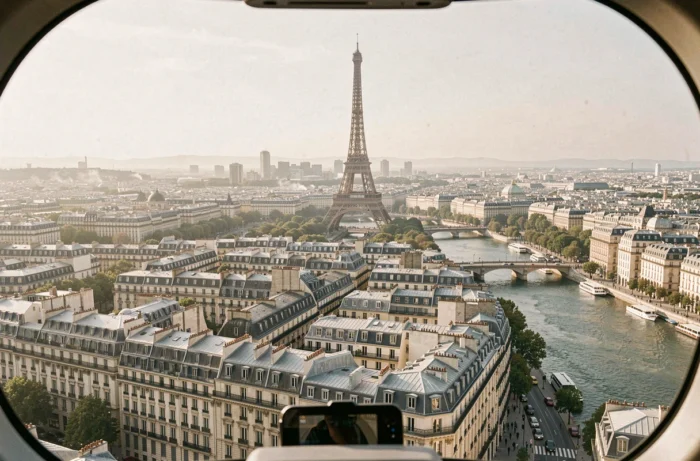
Hovering over Paris from the air remains a fascinating idea, but the French regulatory reality imposes strict constraints on the airspace of the capital. Between permanent no-fly zones, immersive simulations, and guided flights on the outskirts, options to observe the city from the sky exist, provided one knows which are truly accessible.
Air Zone LF-P23: Why Free Flight Over Paris is Prohibited
Paris intra-muros is covered by a permanent no-fly zone identified as LF-P23. This restriction applies to both recreational drones and professional filming. No unauthorized aircraft can enter this space without an exceptional waiver issued by the competent authorities.
This constraint is not limited to drones. It concerns all low-altitude air traffic and adds to restrictions related to airports, sensitive sites, and gatherings of people. For anyone considering filming or simply admiring Paris from the sky, the first step is to understand that free flight above the capital does not exist.
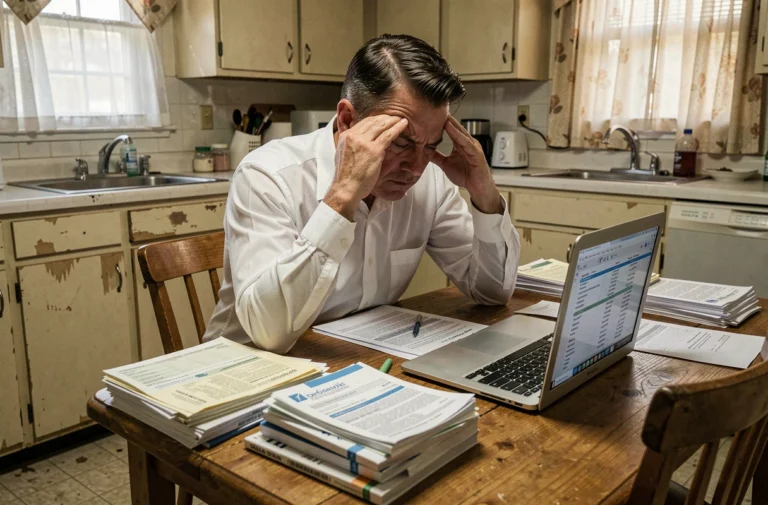
Since January 1, 2026, an order published on December 23, 2025, allows, under certain conditions, some declared professional operators to fly lightweight drones in the open category over public spaces in urban areas. However, this development does not apply to recreational pilots and does not neutralize no-fly zones like Paris intra-muros. Professionals must consult the official map of restrictions and updated aeronautical information before each flight, as temporary restrictions can appear at any time.
For those who still wish to discover the capital from the sky, the most direct solution remains to visit www Paris vu d’avion, a service that offers guided flights over or around the Paris region.
Flying Over Paris by Plane or Helicopter: What Tourist Flights Really Allow
Tourist flights in light aircraft or helicopters are the only legal way to see Paris from the air under real conditions. These services typically take off from airfields located on the outskirts of the capital, as the aircraft must adhere to specific air corridors to avoid or cross regulated areas.
The aerial journey offers a gradual perspective. First, one flies over the suburbs, then the Paris urban fabric becomes denser until recognizable landmarks appear: the Eiffel Tower, the Sacré-Cœur, the Arc de Triomphe, the meanders of the Seine. The altitude and trajectory depend on the permissions obtained by the operator, which varies from one provider to another.
Several elements deserve attention before booking:
- The actual flight duration differs from the total experience time, which includes the safety briefing, the journey to the airfield, and the return to the ground.
- Weather conditions can lead to last-minute delays, as visibility is a non-negotiable criterion for safety and the quality of the panorama.
- The number of passengers per aircraft directly influences visual comfort: a window seat in a four-seat plane does not offer the same field of vision as a helicopter bubble.
These flights remain a one-time experience whose price reflects operational constraints. Aeronautical logistics, insurance, fuel, and airport fees contribute to a structurally high cost.
Immersive Simulation and Virtual Flight Over Paris: An Accessible Alternative
Experiences of virtual flight over Paris have developed precisely because real flight over the capital remains so regulated. These immersive setups, installed in dedicated locations in Paris itself, replicate the sensation of flying through virtual reality or very high-resolution panoramic screens.
The principle is based on aerial images captured by authorized professionals, then reproduced in an environment that simulates movement and altitude. The viewer is suspended or seated in a mobile chair, wearing a headset or facing a curved screen, and follows a predefined route over Parisian neighborhoods and monuments.
The immersion does not replace reality, but it eliminates all logistical constraints. No weather dependency, no travel to the outskirts, no air restrictions to manage. The experience usually lasts less than a real flight, but it remains accessible to a wider audience, including children and those sensitive to motion sickness.
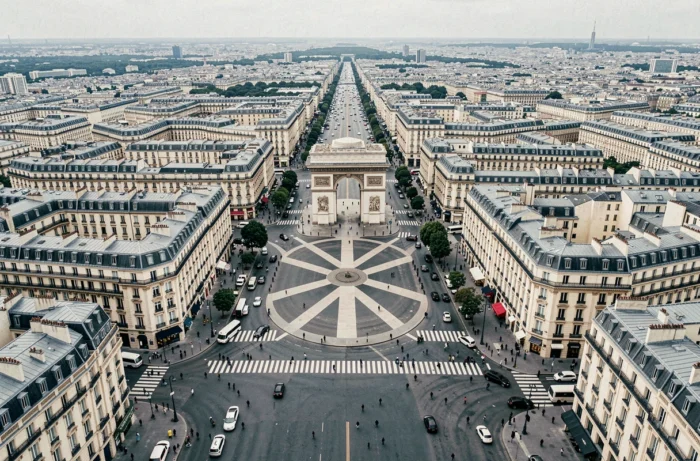
High Viewpoints in Paris: See the City Without Leaving the Ground
Before thinking about the sky, the city itself offers remarkable aerial perspectives from its high points. These viewpoints do not replicate the experience of flying over, but they allow one to embrace the urban landscape with a panoramic view that many visitors underestimate.
Some sites stand out for the quality of their panorama:
- The Montparnasse Tower offers an unobstructed view of nearly the entire city, including the Eiffel Tower, from its rooftop terrace.
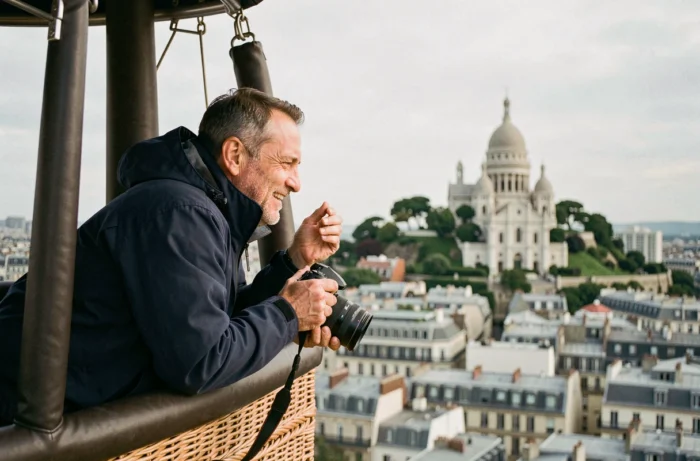
- The Sacré-Cœur, perched on the Montmartre hill, provides a plunging viewpoint to the south that extends well beyond the périphérique on clear days.
- The terraces of some large department stores or cultural institutions, less frequented, offer original angles on the zinc roofs and Parisian gardens.
These viewpoints share a common advantage: they are accessible without aeronautical reservation or specific equipment. For those simply looking to change their perspective on the capital, climbing remains the most immediate option.
Choosing Between Real Flight, Simulation, and Viewpoint
The choice between these three approaches depends on what one is truly seeking. A flight in a plane or helicopter provides a complete sensory experience, with the sound of the engine, the wind, and the physical sensation of altitude. The immersive simulation focuses on accessibility and freedom from weather and regulatory constraints. High viewpoints, on the other hand, offer static but authentic contemplation, without technological intermediaries.
None of these options render the others obsolete. An aerial photography enthusiast will not obtain the same shots from the Montparnasse Tower as from a helicopter. A visitor with children will find more flexibility in a simulation. French air regulations, far from closing the door, simply push towards formats suited to each profile and budget.