
Video games, the web, and pop culture today form a cultural and economic ecosystem whose weight surpasses that of cinema or music in France. Measuring the contours of this universe involves crossing market data, changing demographic profiles, and regulations that reshape the rules of the sector. What indicators allow us to map this so-called “geek” culture in 2026?
Video Game Market Distribution in France by Platform
The 2025 market figures published in 2026 confirm that video games are the leading cultural and creative industry in France, ahead of cinema, music, and books. The breakdown by platform reveals structural disparities between supports.
| Platform | Market Share | Recent Trend |
|---|---|---|
| Consoles | 44 % | Stable |
| Mobile | 30-31 % | Strong growth between 2024 and 2025 |
| PC | About 26 % | Moderate increase |
The console retains the largest share, but it is mobile that drives growth. This shift towards smartphones changes the very nature of the player: shorter sessions, monetization through microtransactions, and access to an audience that does not define itself as “gamer”.
For everything you need to know about Geeks and The City, a media outlet that precisely covers these changes in the web and geek culture, market dynamics constitute a common editorial thread.
Demographic Profile of the French Gamer: An Aging Audience
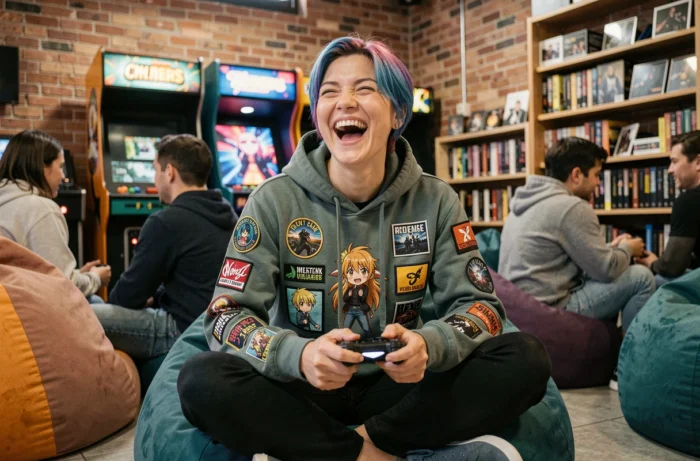
The average age of the French gamer is 40 years, according to recent data. This figure has increased by about 0.5 years of average age per calendar year over the last decade. The stereotype of the teenager glued to their controller no longer corresponds to statistical reality.
This evolution has direct consequences on content production and marketing. Publishers are adapting their catalogs: more mature storylines, enhanced accessibility, and game modes compatible with the schedules of active adults.
The aging of the average gamer also explains why pop culture and video games are increasingly intersecting at conventions, expos, and public events. Parents who played on the Game Boy in the 1990s are now bringing their children in cosplay to Paris Games Week. The generational relay works, and the base is expanding rather than being renewed by substitution.
What Conventions Reveal About This Demographic
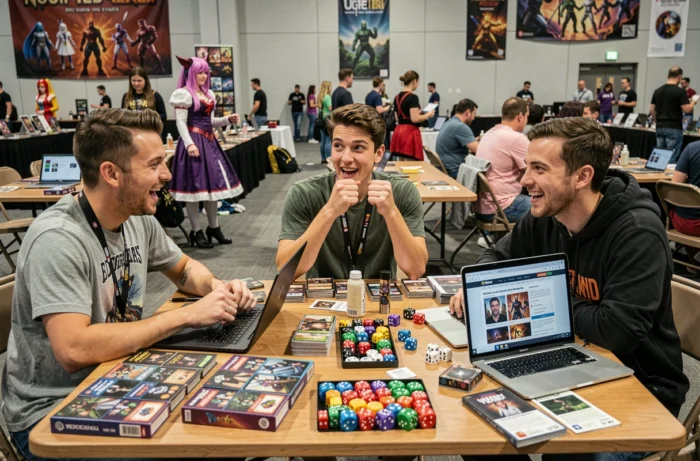
Events like Paris Games Week or regional pop culture conventions attract a multigenerational audience. You can find booths dedicated to retro games alongside virtual reality demonstrations. The professions of video games and animation are represented, with training spaces targeting both high school students and adults in career transition.
PEGI Regulation of Loot Boxes: What Changes in June 2026
Starting from June 2026, the PEGI system imposes a minimum classification of 16 years for any game containing “paid random items” (loot boxes, gacha, paid card packs). This decision marks a regulatory turning point at the European level.
In practical terms, popular licenses among younger audiences that included gacha-type mechanics will be reclassified. Publishers must rethink their monetization model or accept losing a segment of their audience.
- Free-to-play games with paid loot boxes automatically move to PEGI 16, even if their narrative content targets a younger audience
- Publishers can avoid reclassification by removing random purchases or making them purely cosmetic and free
- Distribution platforms (Steam, PlayStation Store, App Store) must apply the new classification as of the effective date
This regulation aligns Europe with a consumer protection logic that treats loot boxes as a form of disguised gambling. For the industry, the message is clear: aggressive monetization targeting minors becomes a legal and commercial risk.
Web, Pop Culture, and Video Games: The Bridges Between Communities
Geek culture is not limited to video games. It permeates the web through formats that did not exist ten years ago. Podcasts dedicated to the video game industry are multiplying and reaching an audience that consumes as much content about the sector as games themselves.
Web content creators (streamers, video makers, specialized writers) constitute a distinct economic link. Their influence on gamers’ purchasing decisions often surpasses that of traditional media. The web has become the primary cultural prescription space for pop culture enthusiasts.
An Expanding Ecosystem of Professions
The intersection of the web, pop culture, and video games generates hybrid professions. Here are a few concrete examples:
- Game designer specializing in virtual economy, whose role evolves with new regulatory constraints on monetization
- Convention community manager, who manages communication for events combining cosplay, publisher booths, and recruitment spaces
- Specialized journalist or podcaster, whose economic model relies on subscriptions or crowdfunding rather than advertising
These profiles did not exist in traditional training programs fifteen years ago. Today, several schools in France offer courses dedicated to the professions of video games and animation, with career paths extending well beyond pure development.
The French video game market is heavier than cinema, and this economic reality structures the entire geek cultural ecosystem. The European regulation of loot boxes, the aging of the average gamer, and the rise of mobile are shaping a rapidly changing landscape. The 2025 market data shows that the next decade will be played out as much on economic models as on the quality of the games themselves.