Eco-friendly materials are no longer a niche option reserved for activist projects. Recycled wood, bamboo, VOC-free paints, low-carbon concrete: these choices are becoming the standard in residential design. This normalization is changing the way we approach interior decoration, even for the simplest projects.
VOC-free paints and recycled materials: the foundation of easy decor in 2026
Specialized content published in 2026 indicates that natural materials are transitioning from trend status to standard in residential and professional projects.
For anyone looking to redecorate a living room or bedroom without major renovations, the options have multiplied. Natural VOC-free paints are now available at most DIY stores, in color ranges as broad as their conventional counterparts. The previously significant cost increase has diminished with the generalization of the offering.
Natural fibers (linen, hemp, jute) and recycled wood are following the same trajectory. When exploring decor with Easy Home France, it becomes clear that the selection of objects and textiles made from sustainable materials has greatly expanded, making these choices easily accessible without any particular sourcing effort.
What this changes for a quick decoration project
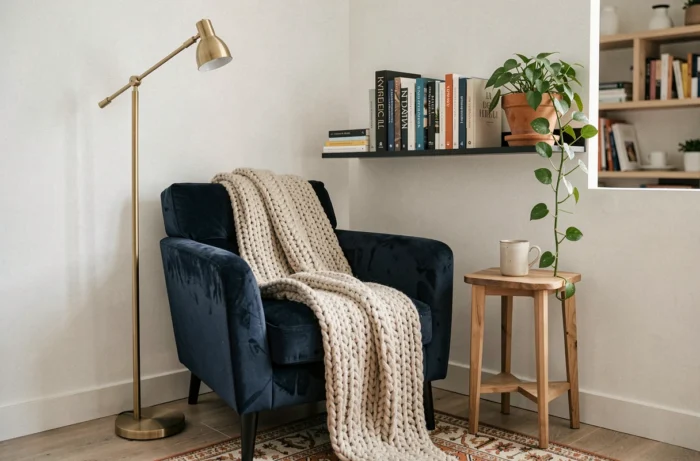
Choosing eco-friendly materials no longer requires extensive research or aesthetic compromises. A recycled linen fabric for living room cushions, a handmade terracotta pot, a reclaimed wood frame: these items are as easily found as their industrial versions.
The limitation remains structural furniture. For a sofa or table, wood and textile recycling channels remain uneven across regions, and field reports vary on the actual durability of some products labeled “eco-friendly.”
Terracotta, ochre, and sage green: the rejection of cold minimalism
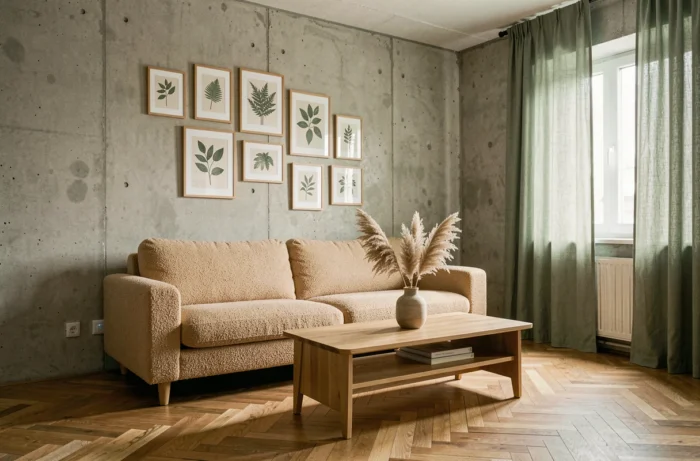
Several decor trend sources published in 2026 converge on one point: the cool and neutral palettes that have dominated decoration for the past decade are giving way. The rising colors are terracotta, ochre, olive green, and sage green.
This chromatic shift reflects a search for warmer and more personalized atmospheres. Scandinavian minimalism, with its white walls and gray tones, has not disappeared, but it is now tinted with more organic shades.
Applying these colors without repainting everything
Repainting an entire room is not always feasible. Easy decor here involves targeted interventions:
- An accent wall in ochre or terracotta in a living room is enough to radically change the atmosphere, without touching the other three walls
- Textiles (curtains, throws, cushion covers) in sage green or olive green bring color without permanent commitment
- Ceramic decorative objects in earthy tones (vases, bowls, candle holders) create discreet yet effective focal points
The idea is not to follow an imposed palette, but to replace grays and pure whites with warmer tones, gradually, as desires evolve.
Discreet home automation and smart lighting to transform a room
Technology in interior decoration has long evoked visible and bulky gadgets. The design content published in 2026 describes a very different reality: technological integration has become discreet, almost invisible.
Lighting scenarios controlled by home automation hubs allow you to change the ambiance of a living room or bedroom without changing a single piece of furniture. Warm and dim lighting in the evening, bright and cool light for working in the morning: the same space changes character in seconds.
Low-energy connected bulbs, compatible with most existing fixtures, are the simplest entry point. No additional wiring or renovations are needed: you replace a bulb, install an app, and lighting becomes a full-fledged decoration tool.
Limits to be aware of
Brand compatibility remains a topic. Not all connected objects communicate with each other, and the proliferation of apps can quickly become frustrating. The available data does not allow for a conclusion that a single ecosystem dominates the residential market.
For an easy decor project, it’s better to start with lighting alone before considering motorized blinds or a connected thermostat. The visual impact of light on an interior is disproportionate to the investment required.
Interior decoration by room: living room, bedroom, kitchen
Each space in the home calls for different interventions. A living room tolerates more experimentation than a kitchen, where functional constraints limit creativity.
For the living room, trends converge towards modular spaces with repositionable furniture. A sofa on wheels, nesting coffee tables, removable shelves: flexibility takes precedence over fixed installation.
In the bedroom, textiles remain the most powerful lever. Changing a bedspread, adding a linen throw, hanging thick fabric curtains alters the perception of space without any tools.
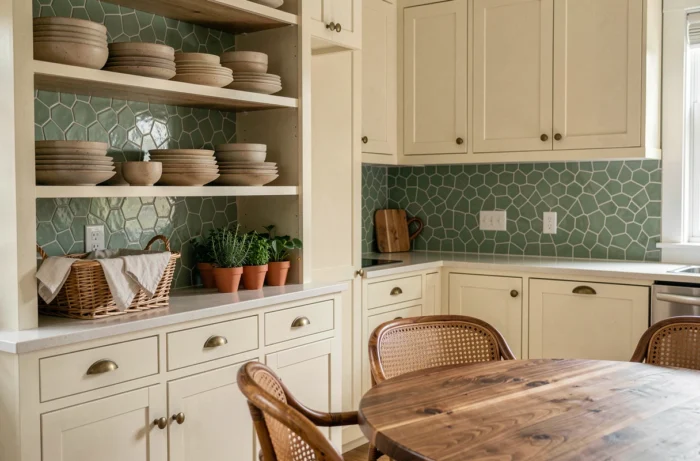
The kitchen poses a different challenge. Surfaces (countertops, backsplashes) are difficult to modify without renovations. Easy decor solutions focus on:
- Repositionable adhesive backsplashes, available in various patterns (cement tiles, light wood, solid colors)
- Visible accessories (glass jars, wooden boards, linen kitchen textiles) that replace plastic with natural materials
- Under-cabinet lighting, easy to install, that transforms the ambiance of a kitchen without altering its layout
Decorating an interior in 2026 relies less on grand gestures and more on an accumulation of modest but coherent choices. A healthy material, a warm color, suitable lighting: each adjustment counts, and their combined effect far exceeds that of an isolated change.