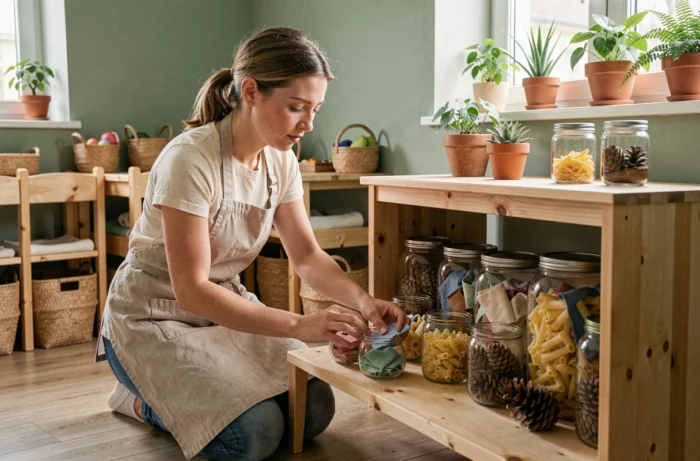
The transition to zero waste in childcare centers is not just about replacing disposable diapers with washable ones. It involves a complete overhaul of hygiene protocols, supply chains, and material flow management within the facility. Zero waste childcare centers that achieve measurable results in their residual waste volumes work simultaneously on three levers: diaper changing, facility maintenance, and food service.
Protocol for washable diaper changing in collective settings: health constraints and textile logistics
Changing washable diapers in a collective setting is very different from domestic practice. The rotation of washable diapers requires a rigorous textile circuit: collection in airtight bins, dry storage (never soaking, which promotes bacterial proliferation), washing at a minimum of 60 °C with a long cycle.
We observe that facilities that perform well in this area have internalized the washing process rather than outsourcing it to an external provider. The cost of a specialized laundry service for washable diapers remains high, and the textile rotation time often exceeds 48 hours when the service is outsourced, which necessitates overstocking.
At the multi-reception center “Graine de Soleil” in Aigueperse, most of the children use washable diapers brought each morning by their families in fabric bags made by the staff. The changing is done with washable cotton squares and locally made liniment.
This organization requires a clear agreement with parents, formalized in the operational regulations. Some families testing the celluloses de Brocéliande on bebe-ethique.fr confirm that the transition remains compatible with a traditional lifestyle.
Cleaning products in zero waste childcare centers: internal production and regulatory framework
Replacing industrial cleaning products with homemade preparations results in a significant reduction in packaging waste. In practice, zero waste childcare centers use three to four basic recipes: a multi-surface cleaner with white vinegar, a disinfectant based on sodium percarbonate, a diluted black soap for floors, and a descaler.
The challenge lies in regulatory traceability. Products made on-site must be documented: exact composition, date of manufacture, storage conditions. The PMI (Maternal and Child Protection) checks these elements during inspections. Some departmental directorates require that technical data sheets be accessible in every room where the product is used.
Zero waste does not mean abandoning all industrial solutions when health situations require it. Keeping an appropriate disinfectant for epidemic episodes remains a necessary precaution in a facility caring for young children.
Management of bulk containers
Bulk supply (white vinegar, baking soda, black soap) requires suppliers capable of delivering in reusable large-volume containers. Returnable containers of 10 to 20 liters replace individual bottles. Some facilities pool their orders with other childcare centers in the area to achieve sufficient volumes and reduce delivery frequency.
Collective catering and reduction of food waste in childcare centers
The food aspect generates a significant portion of waste in a childcare center, including delivery packaging, meal leftovers, and individual packaging (applesauce, yogurts). Facilities engaged in zero waste work on this area along two axes.
- The elimination of individually packaged portions in favor of kitchen preparations: homemade applesauce from fresh fruit, yogurts in reusable pots, bread delivered by a local baker without plastic packaging
- On-site composting of organic waste, made mandatory since 2024 for all food waste producers, including small facilities
- Adjusting the portion sizes served to children based on the actual age of the group, to limit leftovers, with weekly monitoring of discarded quantities
The childcare composter also serves as an educational tool. Children participate in depositing peels and observe the transformation of materials. However, the educational interest should not overshadow the technical constraint: a poorly managed composter (too wet, poorly mixed) generates odors incompatible with a space for young children.

Compliance by 2026-2027 and convergence with the zero waste approach
The national reference framework for early childhood care facilities mandates compliance with premises by August 31, 2026, at the latest. The requirements focus on indoor air quality, lighting (300 lux in living spaces), sun protection, and safety of outdoor areas.
Decree No. 2026-731 of August 1, 2026, introduces additional provisions, some of which will only come into effect on January 1, 2027. This upgrade window offers a concrete opportunity to integrate zero waste into renovation work, rather than treating the two projects separately.
For example, replacing a ventilation system to improve air quality can be accompanied by the installation of a laundry room to internalize diaper washing. Renovating outdoor spaces can include setting up a composting area that meets hygiene standards.
Institutional recognition and environmental labeling
Voluntary reference frameworks exist for facilities engaged in a comprehensive environmental approach, covering air quality, food, purchasing, hygiene, and activities. Obtaining certification requires an external audit and an action plan over several months.
For managers planning their regulatory compliance for 2026-2027, coupling compliance with the labeling process allows for streamlined investments. The two approaches share common requirements regarding air quality and material safety.
The most advanced zero waste childcare centers do not merely eliminate disposables. They rethink their entire flows, from supply to disposal, integrating each change within a precise health and regulatory framework. It is this management rigor, more than just ecological intent, that determines the long-term viability of the model.