This season’s fashion is reflected as much in color palettes as in legislation. Since the definitive adoption of the anti-fast-fashion law in France, fashion trends are taking a different turn: designers are focusing on simplicity, quality materials, and the longevity of pieces. Comparing what emerges from the runways with what the regulatory framework still allows in terms of advertising helps to better understand the relevant clothing choices for the season.
Anti-fast-fashion law and fashion trends: what is changing concretely
The anti-fast-fashion law is not limited to taxing ultra-fast fashion. It also prohibits advertising for disposable fashion, including on social media and through influencers. “Haul” content or recommendations for very fast-turnover brands will lose their main showcase.
This regulatory constraint reshuffles the deck. Brands that relied on collections renewed every two weeks lose their most powerful promotional lever. In contrast, houses that work with natural fibers and cuts designed to last several seasons gain relative visibility.
To follow these developments and identify pieces worth investing in, the fashion page on La Star du Web compiles regular analyses of current collections.
| Criterion | Ultra-fast fashion | Quality-focused collections |
|---|---|---|
| Piece rotation | Every 2 to 3 weeks | 2 to 4 collections per year |
| Dominant materials | Synthetics, recycled polyester | Wool, cashmere, structured linen, cotton |
| Post-law advertising | Prohibited (social media, influencers) | Allowed without restriction |
| Price positioning | Entry-level | Mid and high-end |
| Average lifespan | Few uses | Several seasons |
This table summarizes the structural gap between the two models. Legislation does not eliminate fast fashion, but it removes its main promotional channel among connected consumers.
Natural fibers and earthy palettes: the materials that define the season
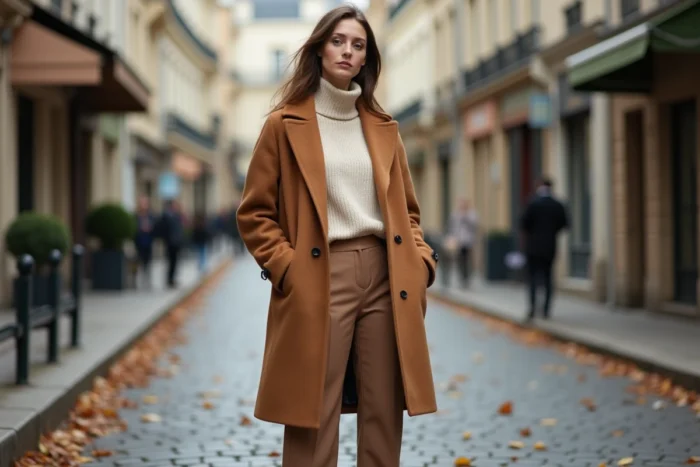
This season’s Parisian runways confirm a trend documented for several months: the rise of natural fibers and outdoor references. Wool, cashmere, and structured linen form the foundation of the silhouettes presented by designers focusing on longevity.
The colors follow the same logic. Earthy palettes (ochre, olive green, sandy beige) dominate mid-range collections. Brighter tones (orange, bright yellow, sky blue) appear on specific pieces like the long flowing dress but remain minority in complete wardrobes.
This shift towards noble materials has a direct consequence on the average price of pieces. A wool or cashmere sweater positioned in the mid-range costs significantly more than a synthetic equivalent. The question is not about spending more, but about spending differently: fewer pieces purchased, worn longer.
- Merino wool and cashmere offer a warmth-to-weight ratio that is hard to match with synthetic materials, with superior durability after washing.
- Structured linen, long confined to summer, appears in wide jackets and pants designed for mid-season.
- Thick cotton (Oxford or twill type) replaces polyester in shirts and blouses from quality-oriented collections.
Signature accessories: building a look with fewer pieces
The 2026 collections reveal a strategic shift. The silhouettes remain understated (structured wide pants, flowing dress, coordinated set), while accessories become personal collection pieces. Brooches, narrative jewelry, and characterful bags serve as style markers.
This approach changes the way to compose a look. Rather than buying a complete outfit each season, the idea is to maintain a stable wardrobe of well-cut basics and only renew the expressive elements. The same wide wool pants and a thick cotton shirt can last through two or three seasons if the accessories evolve.
The designers showcased at Paris Fashion Week illustrate this logic: sharp cuts, little textile excess, and a focus on details (thin belts, oversized brooches, architectural earrings). The accessory replaces the clothing piece as the vector of seasonal trends.
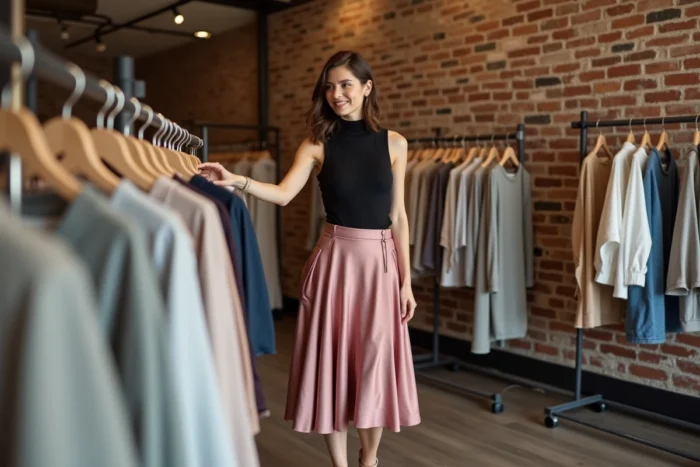
Flowing dress and wide pants: two silhouettes to compare before buying
Among the most visible pieces this season, the long flowing dress and structured wide pants draw attention. These two models serve different purposes, and their relevance depends on lifestyle.
The long flowing dress functions as a standalone piece. It requires only one accessory and minimalist shoes to create a complete outfit. Its limitation: it adapts poorly to strict professional contexts.
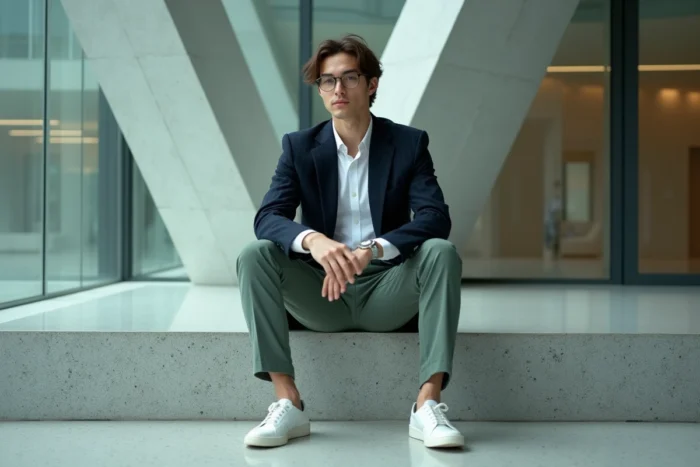
The structured wide pants, on the other hand, can be combined with almost anything. Defined waist, sharp cut, ample fall: it transitions from the office to the weekend with a simple change of top. Its versatility makes it the most cost-effective piece per wear.
- The flowing dress suits silhouettes that prioritize comfort and monochrome outfits, with a higher cost per use if it remains limited to occasions.
- The wide pants can be worn in any season with suitable materials (linen in summer, wool in autumn), increasing their rotation duration in the wardrobe.
- The coordinated set (matching jacket and pants) represents a compromise: it structures the look without requiring assembly thought, but offers less flexibility than separate pieces.
The upcoming season marks a less visible break on the runways than in the rules of the game. The upcoming ban on advertising for ultra-fast fashion will change the way trends circulate and establish themselves. The pieces that withstand this filter, natural materials, durable cuts, expressive accessories, are those that deserve a place in a wardrobe designed beyond a single season.