Nature and well-being form a couple often invoked, rarely analyzed with precision. What types of green spaces produce measurable effects on mental health? Do the benefits vary depending on whether one frequents an urban park, a dense forest, or a riverbank? Recent data allows us to move beyond general discourse to identify what works, what remains neutral, and what can even prove detrimental.
Green Spaces and Mental Health: Not All Environments Are Equal
A synthesis published on October 1, 2026 sheds light on a topic rarely addressed by mainstream media. Most green spaces studied are associated with favorable effects on mental health. In contrast, very dense vegetation and thickets show null or even unfavorable effects in certain analyses.
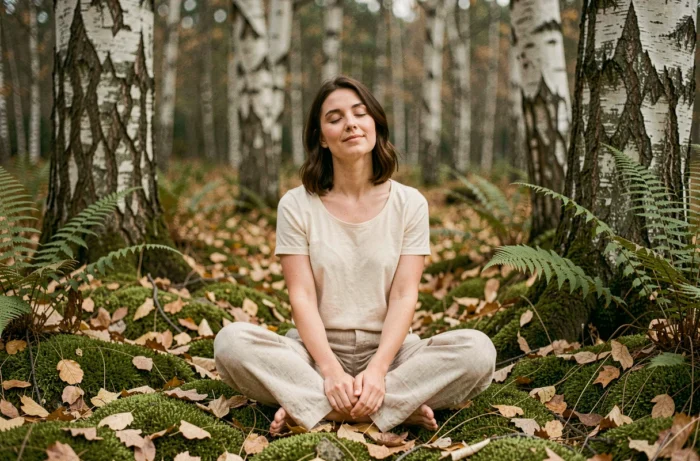
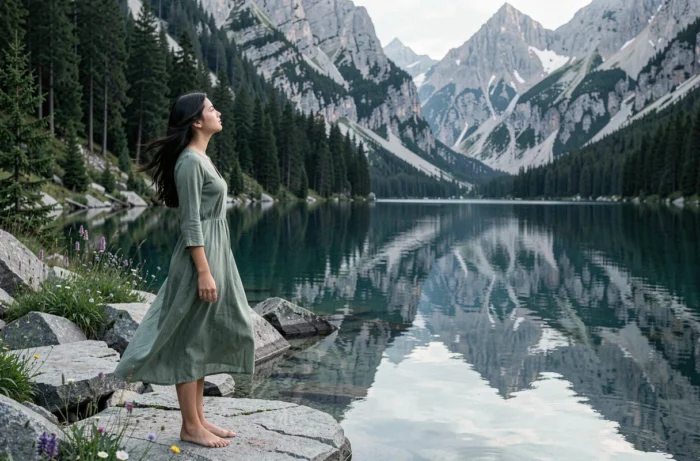
This result breaks the idea that more greenery automatically means more well-being. A tree-lined park with clear sightlines, a blue space (lake, river, canal), or an open walking forest produce positive outcomes. An opaque and poorly maintained vegetation cover does not have the same effect.
| Type of Natural Space | Observed Effect on Mental Health |
|---|---|
| Tree-lined urban park | Favorable |
| Walking forest (cleared paths) | Favorable |
| Blue space (lake, river, coastline) | Favorable |
| Very dense vegetation, thickets | Null to unfavorable |
This distinction has direct implications for communities that develop green spaces. It also concerns families and nature project leaders: choosing a place for a walk or activity in an open forest rather than in impenetrable underbrush is not just a matter of comfort; it is a health parameter.
By browsing the entire L’Esprit Nature site, one can see that the sections cover biodiversity, forest ecosystems, and outdoor well-being practices, reflecting this diversity of natural environments and their uses.
Urban Planning and Biodiversity: Water as a Lever for Well-Being
Urban planning policies increasingly integrate green and blue spaces as levers for public health. Water plays a particular role. Blue spaces (canals, fountains, landscaped banks) are consistently among the environments associated with a positive effect on stress and mood.
For territorial projects in France, several institutional tools provide concrete benchmarks for communities, local health contracts, associations, and natural space managers. The goal: to make contact with nature and awareness of biodiversity levers for social connection and mental health prevention.
What This Means for Family Activities or Activities with Children
Taking children to observe wildlife by a body of water or organizing a walk along a river has a different impact than a simple stroll on a path closed off by vegetation. Visual openness and the presence of water amplify the measured benefits.
Nature activities that combine biodiversity observation and proximity to a blue space are those that show the most consistent results in available studies. This is a concrete criterion for parents, teachers, or nature guides looking for a suitable environment.
Well-Being Practices Related to Nature: What the Regulations Say in 2026
The well-being sector through nature is not exempt from commercial rules. The DGCCRF published a March 24, 2026 fact sheet reminding practitioners of their obligations. Three points deserve particular attention:
- Practitioners must clearly present the non-medical nature of their services, their qualifications, and the reasonably expected outcomes. Promises to “treat,” “diagnose,” or “cure” pose legal and ethical issues.
- Beyond 25 euros, issuing a receipt is mandatory. A consumer mediator must be designated.
- Online reviews must respect commercial fairness: false testimonials and misleading selection of customer feedback are prohibited.
These rules directly concern professionals offering sessions of sylvotherapy, guided forest bathing, therapeutic gardening workshops, or any well-being activity in a natural environment. The regulation aims not to hinder these practices but to protect consumers from sometimes excessive claims.
Nature Projects in Alsace and Beyond: Tools to Structure Initiatives
France has a growing network of projects that connect nature, health, and biodiversity. In Alsace, as in other regions, associations and communities are developing programs for guided walks, ecosystem observation workshops, and nature outings for families.
Complementary institutional fact sheets on favorable developments, quality of living environments, and sustainable food allow project leaders to cross-reference approaches.
Criteria for Choosing a Nature Project or Activity
Some concrete parameters help distinguish a solid initiative from a purely commercial offer:
- The location prioritizes an open space (park, landscaped forest, waterside) rather than a closed and dense environment.
- The facilitator clearly displays their qualifications and the non-medical nature of the service.
- The program includes an educational dimension on biodiversity or local ecosystems, not just a promise of relaxation.
- Prices, cancellation conditions, and mediation modalities are accessible before booking.
The quality of a nature project is measured by the transparency of its framework as much as by the beauty of the landscape. Recent data confirms that the type of natural environment, the degree of visual openness, and the presence of water are parameters that influence outcomes. Choosing an activity in an open forest by a stream rather than in dense underbrush is not a matter of comfort; it is a documented choice.